ลูกค้า 1,074 รายของธุรกิจครอบครัวถูกติดป้ายประเภทด้วยมือ โดยดูจากชื่อร้าน งานนี้เปลี่ยนมาใช้ประวัติการซื้อจริงเป็นตัวตัดสิน ทั้งเพื่อแก้ป้ายที่ผิด และเพื่อหาลูกค้าประจำที่กำลังหายไป
The family business's 1,074 customers had been labelled by hand from their shop names. This work switched to real purchase history as the judge, both to fix wrong labels and to find regulars who are drifting away.
ขั้นที่มีคนเป็นผู้ตัดสินใจหรือใช้งานSteps where a person decides or uses it
| กลุ่ม | สัญญาณหลัก | บิล/ปี | ความหลากหลายสินค้า |
|---|---|---|---|
| ยี่ปั๊ว / ดีลเลอร์ | ซื้อถี่ + หลากหลายมาก | 100+ | สูง |
| ร้านค้าหน้าร้าน | ถี่ปานกลาง + เพดานจำนวนต่ำ | 10–80 | กลาง |
| โครงการ | ซื้อน้อยครั้ง แต่ออเดอร์ใหญ่ | 1–20 | ต่ำ |
| นายหน้า | ไม่สม่ำเสมอ ออเดอร์เล็ก | 5–50 | หลากหลาย |
| Segment | Main signal | Invoices/yr | Product variety |
|---|---|---|---|
| Wholesaler / dealer | Very frequent + very varied | 100+ | High |
| Retail shop | Medium frequency + low quantity ceiling | 10–80 | Medium |
| Project | Rare but large orders | 1–20 | Low |
| Broker | Irregular, small orders | 5–50 | Varied |
ชื่อร้านใช้เป็นตัวตัดสินไม่ได้ ใช้พฤติกรรมการซื้อเป็นหลัก
Shop names can't be trusted; behavior is the primary signal
AI เขียนโค้ดให้ แต่โจทย์ เกณฑ์ และสิ่งที่ยอมไม่ได้ ผมเป็นคนกำหนด
The AI writes the code; the problem, the criteria and the non-negotiables are mine.
ตอนแรกจะแยกร้านหน้าร้านกับร้านขายส่งด้วยจำนวนชิ้นเฉลี่ยต่อรายการ แต่ปรากฏว่าค่ากลางของสองกลุ่มแทบเท่ากัน (17.6 กับ 18.6 ชิ้น) ตัวที่แยกได้จริงคือเพดาน เพราะร้านหน้าร้านไม่เคยสั่งเกินระดับหนึ่ง ส่วนร้านขายส่งมีบางบิลที่สั่งหลายร้อยชิ้น
I first tried to separate retail shops from wholesalers by average units per line, but the two groups' medians were almost identical (17.6 vs 18.6). What actually separated them was the ceiling: retail shops never order above a certain level, while wholesalers have some invoices with hundreds of units.
ก่อนตั้งตัวเลข ผมให้คำนวณหน้าตาของลูกค้ากลุ่มเป้าหมายที่ป้ายถูกแน่ๆ ก่อน แล้วค่อยตั้งเกณฑ์จากตรงนั้น
Before setting any number, I had the profile of the target group calculated from customers whose label was certainly correct, and set thresholds from that.
ลูกค้าที่ซื้อไม่ถึง 3 บิลจะไม่ถูกเปลี่ยนป้าย เพราะอาจแค่บังเอิญซื้อน้อยในครั้งนั้น และบัญชีรวมของลูกค้าเงินสดหน้าร้านจะไม่ถูกแตะ
Customers with fewer than 3 invoices are never relabelled, since a small order may be a one-off. The pooled walk-in cash account is never touched.
โค้ดทั้งหมดเขียนโดย Claude Code ตามที่ผมสั่ง ผมอ่านแล้วอธิบายได้ว่าแต่ละท่อนทำอะไร และทำไมต้องเขียนแบบนี้ (ข้อมูลลับอย่างรหัสผ่านและที่อยู่เครื่องถูกตัดออก)
All code was written by Claude Code under my direction. I can explain what each part does and why it's written that way. (Secrets such as keys and machine paths are removed; code comments are in Thai.)
เกณฑ์ที่ใช้จริง (ย่อจากงานวิเคราะห์): ถ้าเพดานจำนวนต่อรายการไม่เกิน 12 ชิ้น และซื้อมาแล้วอย่างน้อย 3 บิล แปลว่าซื้อแบบหน้าร้านเป็นนิสัย ไม่ใช่ซื้อน้อยแค่ครั้งเดียว รอบแรกเจอ 6 ราย ทุกรายมีมูลค่าต่อบิลอยู่ในช่วงของหน้าร้านจริง
The rule actually used (condensed from the analysis): a per-line ceiling of 12 units or fewer AND at least 3 invoices means buying like a retail shop is a habit, not a one-off. The first pass found 6, all with invoice values in the true retail range.
# per customer: เพดานชิ้นต่อรายการ + จำนวนบิล + มูลค่าเฉลี่ยต่อบิล
for cus, lines in sales_by_customer.items():
bills = {l.doc for l in lines}
max_qty = max(l.qty for l in lines)
if cus in VOID_DOCS or cus == CASH_BUCKET: # บิลยกเลิก / บัญชีรวมเงินสด
continue
if max_qty <= 12 and len(bills) >= 3: # เพดานต่ำ + ซื้อซ้ำ = นิสัยหน้าร้าน
candidates.append((cus, max_qty, len(bills), avg_bill_value(lines)))ทุกมุมมองบนแดชบอร์ดเป็นแค่ตัวกรองสั้นๆ บนข้อมูลชุดเดียวกัน จะเพิ่มกลุ่มใหม่ก็แค่เพิ่มเงื่อนไข
Each dashboard view is just a short filter over the same data; adding a segment means adding a condition.
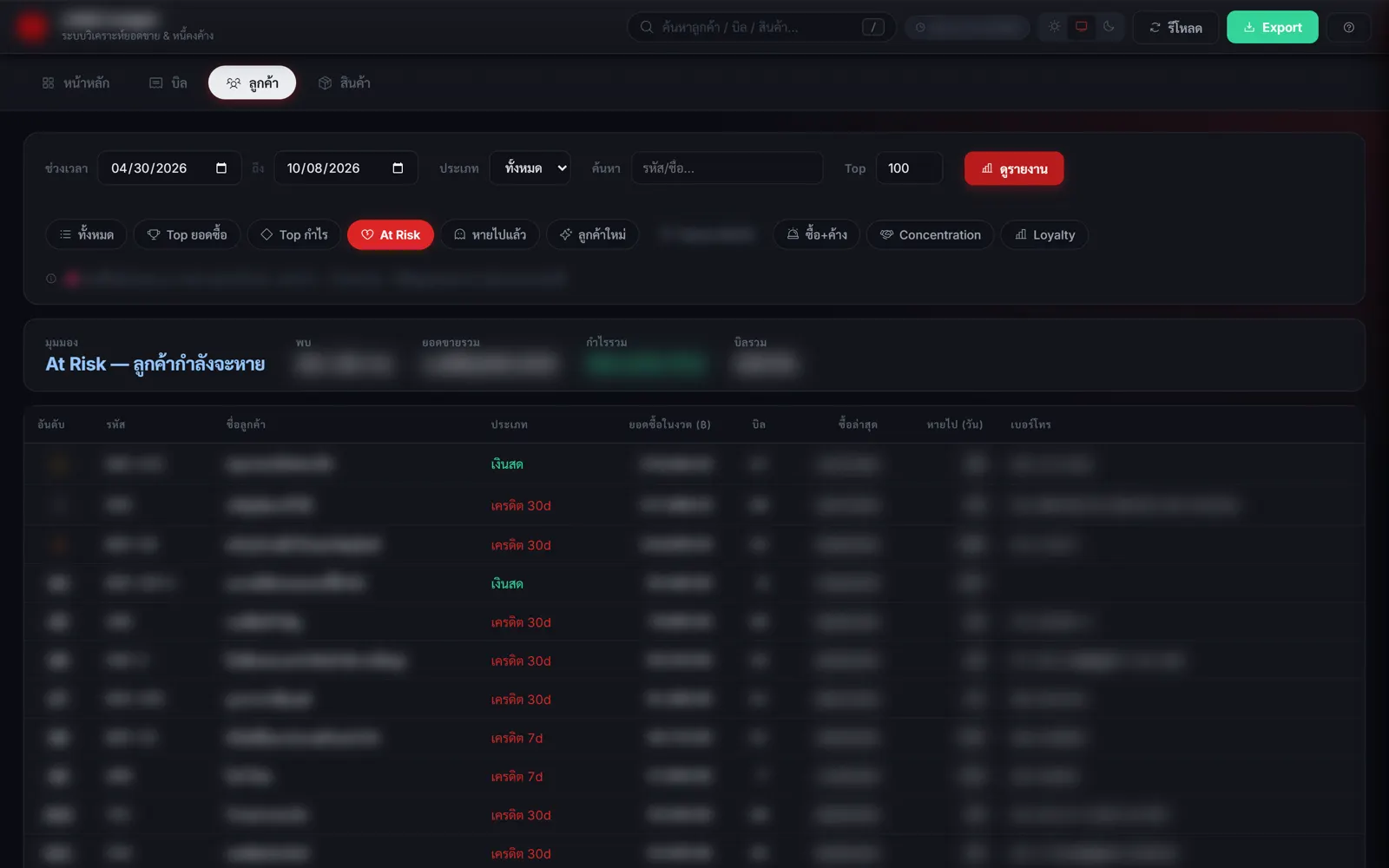
case 'atrisk': // เคยซื้อสม่ำเสมอ แต่หายไป 60–180 วัน
result = customers.filter(c => c.bills >= 3 && c.daysSince >= 60 && c.daysSince < 180)
.sort((a, b) => b.saleVal - a.saleVal);
break;
case 'dormant': // หายไปเกิน 180 วัน
result = customers.filter(c => c.daysSince >= 180 && c.saleVal > 0);
break;
case 'newcus': // ซื้อครั้งแรกภายใน 90 วัน
result = customers.filter(c => c.daysFirst <= 90 && c.saleVal > 0);
break;จำนวนชิ้นในระบบมีสองช่อง
The system has two quantity fields
ใช้ช่องที่เป็นจำนวนชิ้นจริง ไม่ใช่ช่องหน่วยขาย
Use the one that is the real unit count, not the selling-unit field
บิลยกเลิกไม่ได้อยู่ในตารางรายการขาย
Cancelled invoices weren't in the sales-line table
ดึงรายชื่อบิลยกเลิกจากอีกตารางมาตัดออกก่อน
Pull the list of cancelled invoices from another table and exclude them first
แก้ข้อมูลใน ERP มีความเสี่ยง
Editing ERP data is risky
ปิดโปรแกรมบัญชี สำรองข้อมูล แก้ แล้วสั่งจัดเรียงดัชนีใหม่ทุกครั้ง
Close the accounting software, back up, edit, then rebuild the indexes every time